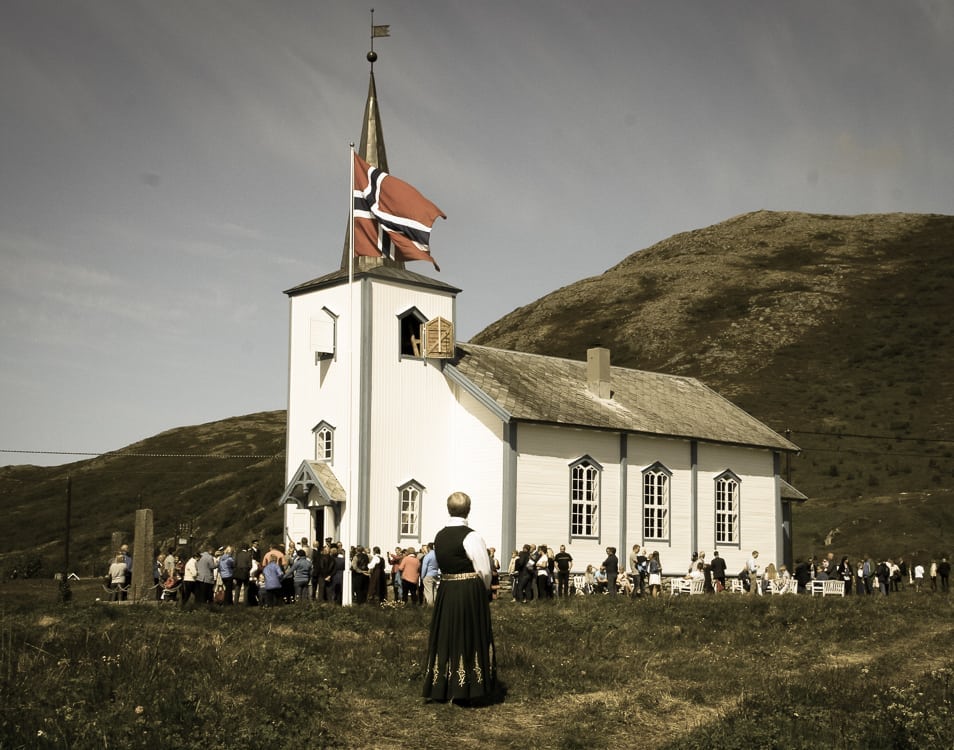
The church of Helgøy has been the church of the Hegelunds for several hundred years and many members of the clan were deeply involved in the administration, upkeeping and workings of the church. Several of them served as its parish clerks (klokkere): Hans Mortensen Hegelund from 1743 to 1748, Jacob Klingenberg from 1773 to 1792, and Morten Mortensen Hegelund for more than forty years, from 1794 until his death in 1836.
The name of the island, Helgøy, comes from Old Norse and means “holy island.” Looking at historical records from the Middle Ages, Helgøy probably became an annex of the Church of Tromsø sometime around the year 1500.
The church that can be seen in Helgøy today was originally built in 1741 at Hemnes in Helgeland. In 1872 it was moved to the village of Hamn on Senja, and in 1889 it was moved to its final (so far) destination on Helgøy, replacing the previous church building from the 17th century. It was consecrated on 7 March 1889.
Helgøy used to be a crucial trading post and central meeting point for the local population of fishermen and other coastal people.
Commerce with the Russians had its peak throughout the 19th century and continued until the Bolshevik Revolution. Stockfish, together with fresh fish, pelts and skins were then exchanged for flour, caviar, cereals and rope from the White Sea.
The heyday of Helgøy was without a shadow of doubt, in the late 19th century under the auspices of Christian Figenschou (1846 – 1939) the famed “King of Helgøy.”
Helgøy is nowadays mostly uninhabited and mostly used as a vacation area and tourist destination. The local church is still being taken care of and is still used on special occasions. Because no bridges or tunnels were ever built to connect Helgøy with the outside world, such events require the use of a boat to ferry the visitors.
The 125th Anniversary of the Helgøy Church
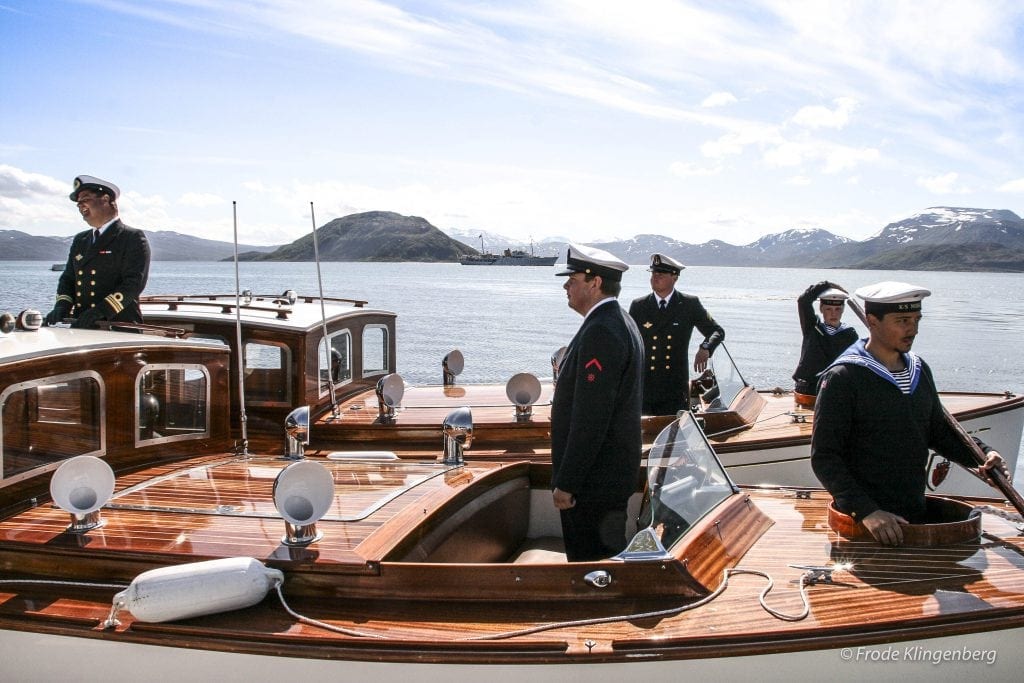
In 2014, the church’s 125th anniversary was the occasion for much celebration, with boats ferrying guests out to the island for the festivities.
Related article: