
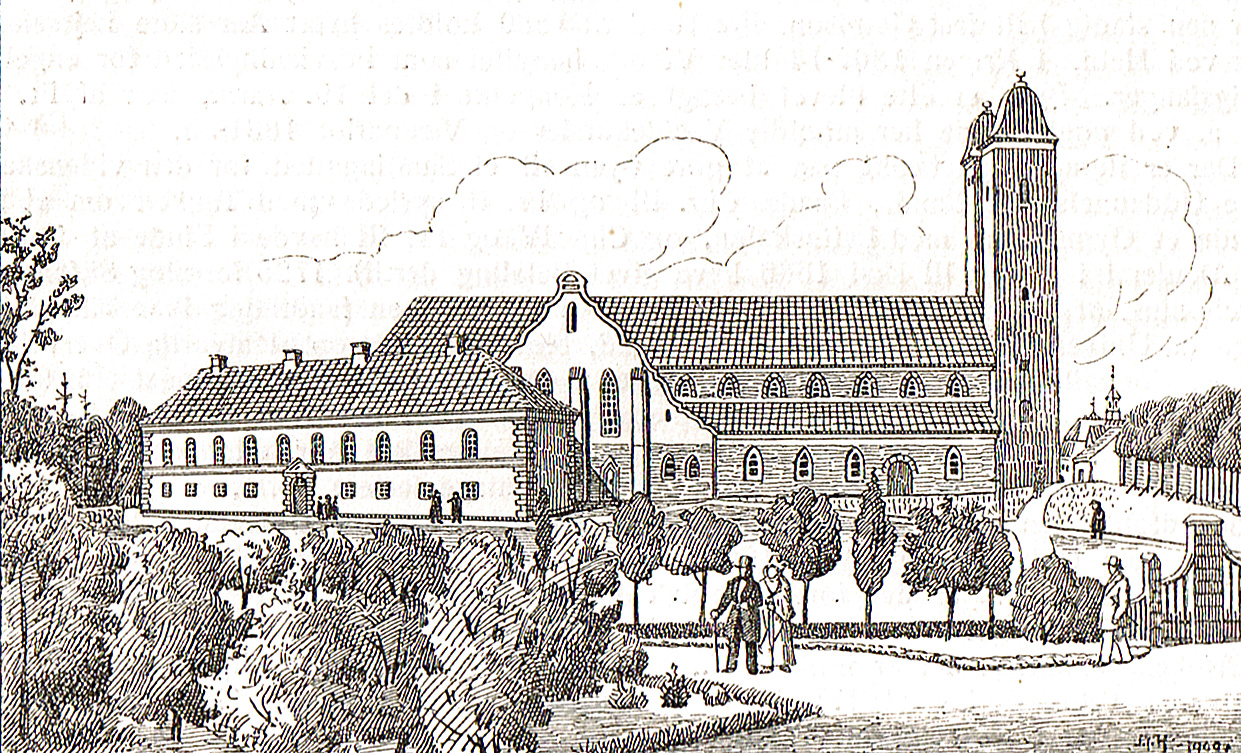
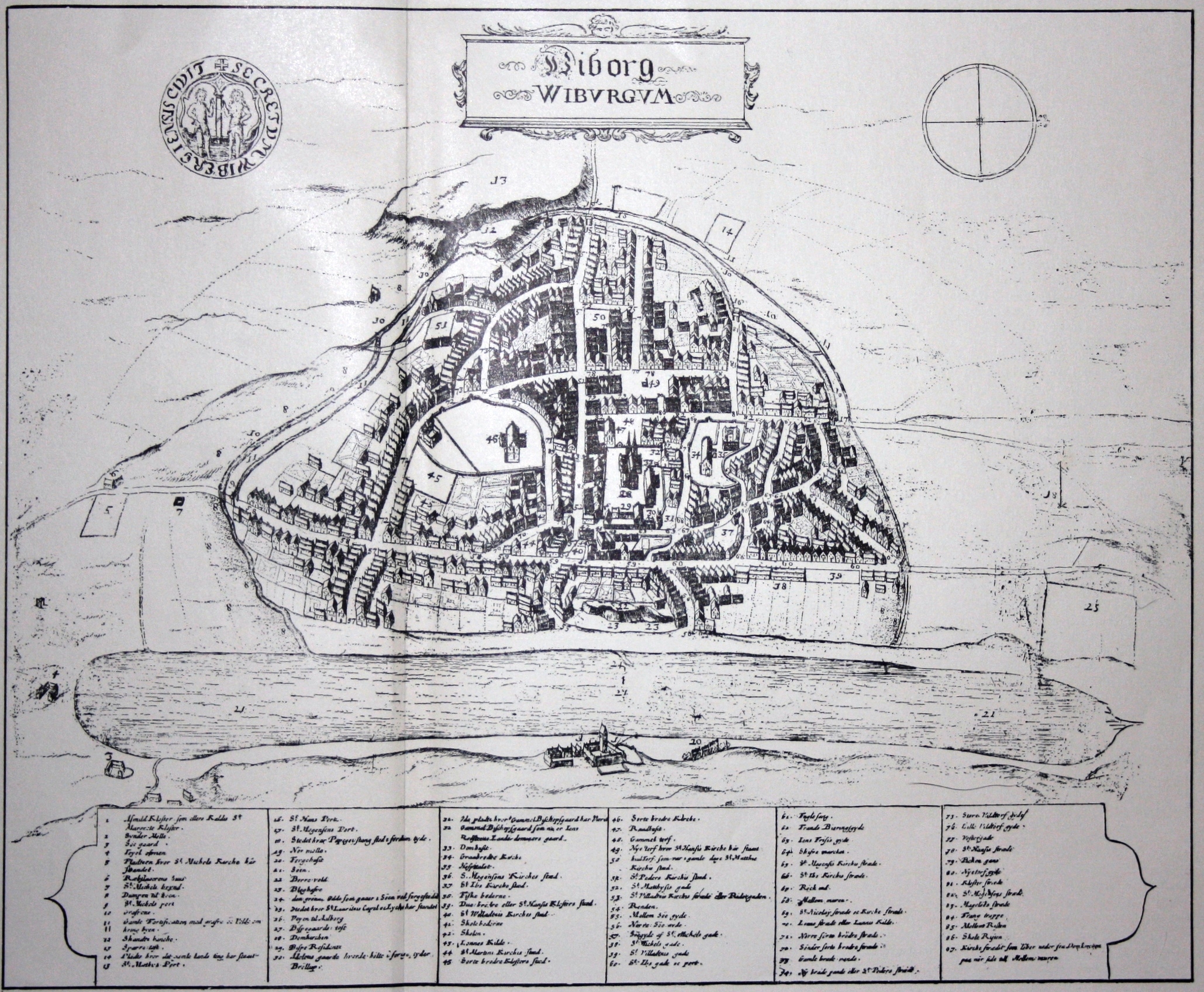
Long before the Hegelunds came to the Arctic in 1635, they were townsmen of Viborg – councilmen, mayors and merchants in the old heart of Jutland. This is the story of that dynasty, told from the sources that survive.
The old heart of Jutland
Viborg is not Denmark’s oldest town – that is Ribe – but for centuries it was Jutland’s centre of law and power. The name comes from the Old Norse Vébjǫrg, a holy place on a hill. Here the Jutland assembly met, laws were proclaimed, and new kings were hailed. The town became a bishop’s seat in the 1060s, and its great cathedral was raised in the 1100s.
The family name most likely comes from Hegelund, a farm in Salling, north of Viborg, mentioned in the records from 1468. But it was inside the walls of Viborg that the family made its mark.
A widow and four sons
The Hegelunds step into the written record in the 1530s. A letter from 1537, known today only through a later copy, names Offven Pedersdatter Hegelund and her four sons: Morten, Peder, Jens and Søren. Their father, Christen, is not documented himself; he lives on only in his sons’ name, Christensen.
The four brothers went on to remarkable careers:
- Morten Christensen Hegelund – our direct ancestor – sat on Viborg’s town council from 1545 until his death on 15 July 1574.
- Peder Christensen Hegelund became mayor of Viborg. He married a daughter of mayor Peder Jensen Trane, and named his eldest son Peder Trane Hegelund after her father.
- Jens Christensen Hegelund moved to Ribe, became mayor there, and founded a branch of his own.
- Søren also became a councilman in Viborg.
The bishop of Ribe
Jens’s son, Peder Jensen Hegelund (1542–1614), became one of the learned men of the Danish Renaissance. He was rector of Ribe Cathedral School from 1569 to 1580, and bishop of Ribe from 1595. He wrote school comedies – his Calumnia was performed in Ribe in 1576 – and kept a diary throughout his life, one of the most vivid records of daily life in sixteenth-century Denmark.
Councilmen and a mayor
In Viborg, the line continued. Morten’s son Søren Mortensen Hegelund sat on the council and died in 1600. The Hegelunds married into the town’s other leading families, above all the Tranes: one of Søren’s daughters, Mette, married councilman Anders Trane.
Søren’s son, Christen Sørensen Hegelund, was mayor of Viborg around 1620. He died in 1622 – by May that year the court records speak of “the late Christen Hegelund’s sons, Mikkel and Morten”. With him, the male line of the Hegelunds left Viborg.
North to Norway
Both sons went north. Morten Christensen Hegelund became bailiff of Troms, came to Karlsøy in 1635 and settled at Elvevoll – today’s Hansnes on Ringvassøy. Every Hegelund, Heggelund and Klingenberg in this family descends from him.
His brother Mikkel had a son, Christen Michelsen Heggelund, born in Ebeltoft around 1619. He took citizenship in Bergen in 1661, founded the trading post at Skjervøy the same year, and became known as “the King of Skjervøy” – the merchant the priest-poet Petter Dass mocked in The Trumpet of Nordland.
What we know – and what we don’t
Family trees carry the line further back, to a Christen Mortensen Hegelund born around 1410, and give one Morten Hegelund of the 1400s the title of mayor. No contemporary sources confirm this. The documented story begins with the widow and her four sons in the 1530s – and that story is remarkable enough.
Sources
- “To menn ved navn Morten Hegelund fra Viborg på 1500-tallet”, nermo.org
- Personalhistorisk Tidsskrift: Viborg’s patrician families (Hegelund, Trane, Thøger)
- Viborg landstings dombøger, række A 1608–1661 (entry of 25 May 1622)
- Den Store Danske / lex.dk: Peder Jensen Hegelund
- Håvard Dahl Bratrein, Karlsøy og Helgøy bygdebok
- Images: Viborg Cathedral before 1876 (lithograph) and Resen’s map of Viborg, 1677 – both public domain, Wikimedia Commons
Related: The Hegelund Family